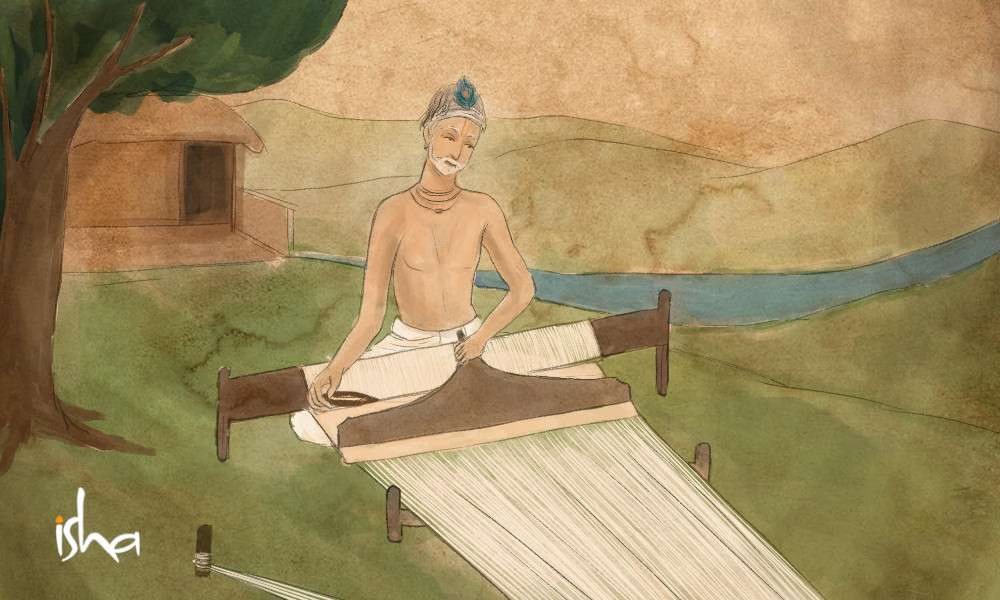
The Paradox of Unity and Diversity
In the profound words of Kabir, "He is one, yet many; He is everywhere, yet nowhere," we encounter a striking paradox that invites deep contemplation. This statement encapsulates the essence of existence, suggesting that the divine is both singular and manifold, omnipresent yet elusive. Understanding this duality is crucial for those on a spiritual path, as it challenges our conventional perceptions of reality and invites us to explore the deeper layers of existence.
As we delve into this quote, we find ourselves at the intersection of spirituality and philosophy, where the nature of the divine and the universe is questioned. Kabir, a luminary of the bhakti tradition, urges us to transcend the limitations of our dualistic thinking. This exploration is not merely an intellectual exercise; it is a call to experience the divine in its fullness, embracing both the unity and the multiplicity that coexist within our lives.
The image / the metaphor
The imagery in Kabir's quote is rich and evocative, presenting a vision of the divine that is both intimate and expansive. The phrase "He is one, yet many" suggests a unity that encompasses diversity, inviting us to consider how the singular essence of the divine manifests in the myriad forms of life. The verbs "is" and "yet" create a dynamic tension, highlighting the coexistence of seemingly contradictory truths. This paradoxical nature of the divine evokes a sense of wonder and invites us to explore the deeper meanings behind our experiences.
Delving deeper into the metaphor, we can see that Kabir's words reflect the complexity of our own existence. Just as the divine is both one and many, so too are we as individuals. Each person embodies a unique expression of the universal spirit, contributing to the rich tapestry of life. This understanding encourages us to embrace our individuality while recognizing our interconnectedness with all beings, fostering a sense of compassion and unity in our interactions with others.
In the speaker's tradition
Kabir's teachings are deeply rooted in the bhakti tradition, which emphasizes devotion and love for the divine as a means of spiritual realization. Concepts such as dharma, or righteous living, and bhakti, the path of devotion, are central to understanding his perspective. The idea of kenosis, or self-emptying, resonates with Kabir's assertion that the divine is both present and absent, inviting us to let go of our ego and attachments to experience the fullness of existence. This interplay of unity and multiplicity is also reflected in the Buddhist concept of sunyata, or emptiness, which suggests that all phenomena are interconnected and devoid of inherent existence.
In the context of Kabir's poetry, we can draw parallels with the teachings found in the Bhagavad Gita, where Krishna speaks of the divine as both immanent and transcendent. In Chapter 9, Verse 22, Krishna assures Arjuna that those who are devoted to Him will have their needs met, illustrating the idea that the divine is intimately involved in the lives of individuals while also existing beyond the confines of the material world. This duality is a recurring theme in spiritual literature, inviting seekers to explore the depths of their own understanding.
Living the teaching
Consider a modern scenario where this teaching resonates: a person grappling with the complexities of their identity in a multicultural society. They may feel torn between their cultural heritage and the broader societal expectations, embodying the tension between the one and the many. By reflecting on Kabir's words, they can find solace in the understanding that their unique identity is a vital expression of the universal spirit. This realization can empower them to embrace their individuality while fostering connections with others, recognizing that diversity enriches the collective experience.
In a different context, imagine a relationship facing challenges due to misunderstandings and differing perspectives. By applying Kabir's teaching, both partners can cultivate a deeper awareness of their shared humanity, acknowledging that while they may have distinct viewpoints, they are ultimately part of the same whole. This perspective encourages empathy and compassion, allowing them to navigate their differences with grace and understanding. In daily practices such as meditation or mindful communication, they can embody the essence of unity amidst diversity, fostering a more harmonious connection.
A reflection
As we contemplate Kabir's profound statement, we are invited to explore the paradox of existence within our own lives. How can we embrace the complexity of being both one and many in our daily experiences? This question encourages us to reflect on our relationships, our identities, and our connection to the divine. In seeking to understand this duality, we open ourselves to a deeper appreciation of the richness of life and the interconnectedness of all beings.



Join the BrightStar Community
Stay connected with daily inspiration, event announcements, and community wisdom